Pull up Woodinville's median home price on two different trackers this week and you'll get two different answers, and not by a rounding error. Redfin's three months ending July 2026 put the median sale price at $1.0 million, down 11.1 percent from the same stretch a year earlier. NWMLS data for August 2026 shows a residential median of $1.43 million, up 12.2 percent year over year. Same city, adjacent reporting periods, two numbers that don't just disagree, they point in different directions.
The instinct is to assume one tracker is wrong or stale. Different answers don't necessarily mean either one is. They're each summarizing a different mix of homes that happened to close during their reporting periods, and Woodinville's housing stock is unusual enough that the mix matters more than it does almost anywhere else on the Eastside.
The assumption that doesn't hold up
The easy explanation for Woodinville's price swings is wine country. The city is home to more than 100 tasting rooms within city limits, anchored by Chateau Ste. Michelle, and it's tempting to assume proximity to that scene is what pushes prices around. It isn't. The real fault line in Woodinville's market runs through the lot, not the zip code or the distance to a tasting room.
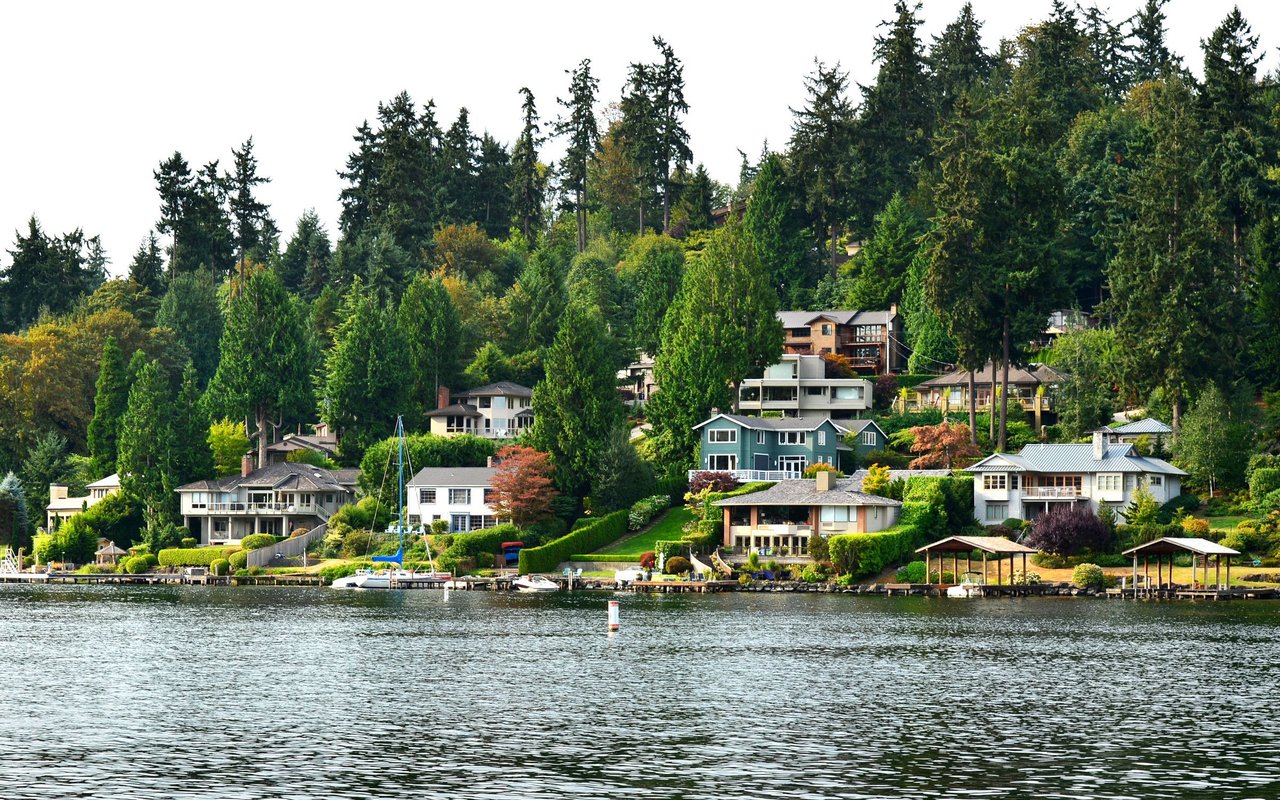
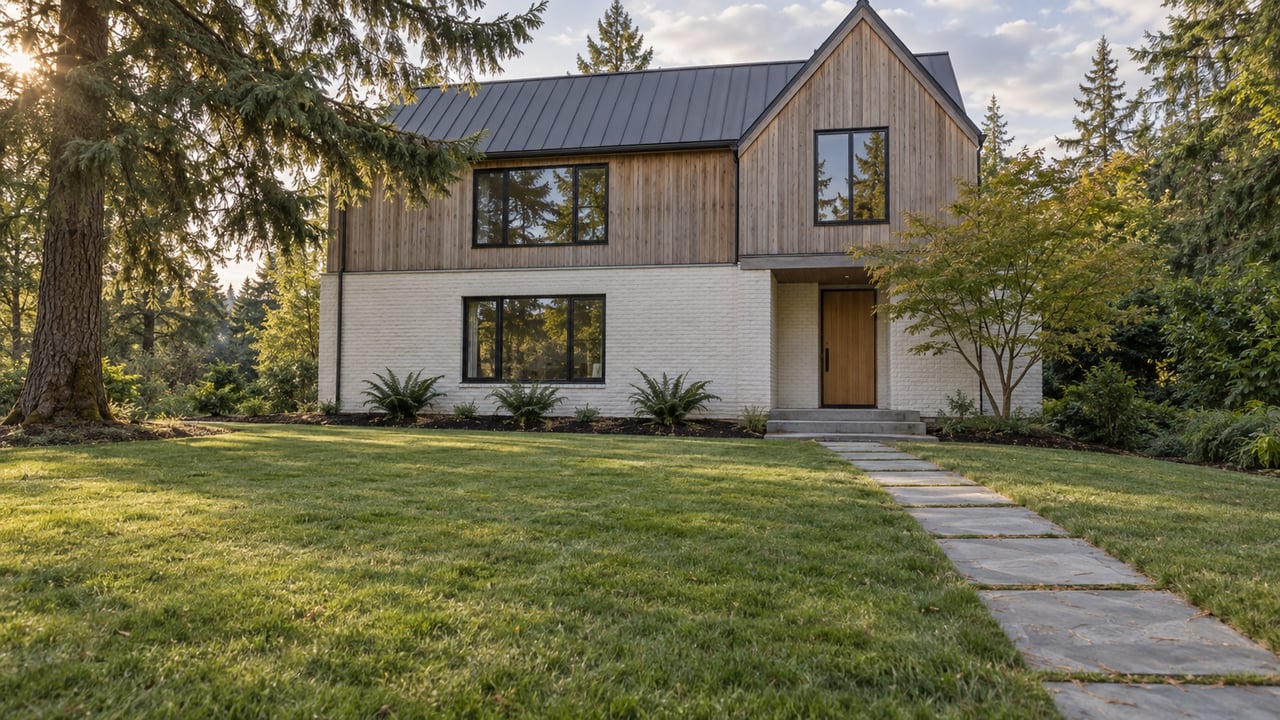
On one side sits the in-city stock: neighborhoods like Reinwood, Leota, and Wellington, along with newer built communities such as Autumn Grove and Laurel Hills. These are standard suburban lots, sidewalks, cul-de-sacs, homes that price the way the rest of the Eastside prices, on square footage, condition, and school-zone comps within the Northshore School District.
On the other side sits Hollywood Hill and the acreage belt around Cottage Lake and Bear Creek. Single-family listings on Hollywood Hill typically span $1.1 million to $2.5 million or more, and the number moves on lot size, barns, wells, septic systems, and equestrian improvements, not on price per square foot. A home on Hollywood Hill can sit five minutes from a tasting room and still price entirely on what the land does, not on how close it is to the wine district. One recent Hollywood Hill listing offered 15 private acres with a gated entry, a three-stall barn built in 2019, and wraparound outdoor living space, priced for what the acreage and improvements deliver, with the wine country proximity mentioned as a footnote. Another described a 1.83-acre corner lot with a two-stall barn and an antique windmill, valued for the land and the outbuildings rather than for square footage at all.
That's the split. Not wine country versus everywhere else. Acreage versus everything priced by the square foot.
What each tier actually looks like
| In-city standard lot | Hollywood Hill / acreage belt | |
|---|---|---|
| Typical price range | Roughly $1.0M-$1.5M for single-family | $1.1M to $2.5M+, land-dependent |
| What sets the price | Square footage, condition, school-zone comps | Lot size, water and septic systems, barns, privacy |
| Pace | Faster turnover, appeals to buyers wanting turnkey | Slower, waits for a buyer who wants the lifestyle |
| Example communities | Reinwood, Leota, Wellington, Autumn Grove, Laurel Hills | Hollywood Hill, Cottage Lake, Bear Creek |
When a month's closings lean toward the acreage tier, the citywide median jumps because those sales carry higher price tags and don't compress into a tight band the way in-city sales do. When a month leans toward condos, townhomes, and standard lots, the median falls even if nothing about underlying value changed. A single $3.75 million estate sale and a cluster of $315,000 condo closings can land in the same 30-day window and both are real, both are Woodinville, and averaging them into one number tells you almost nothing about what either buyer actually paid for.
The days-on-market gap is the tell
A 30-day snapshot from earlier in 2026 showed 39 homes sold in Woodinville with a median sold price of $1,499,990 and an average sold price of $1,548,621. That gap between median and average is a signal, not noise. It means a handful of higher-end sales, some as high as $3.75 million, pulled the average above the median.
The same snapshot showed a median days-on-market of 33 and an average of 50. That 17-day spread exists because acreage and estate properties take longer to find the right buyer. They aren't overpriced in the sense of a bad listing, they're priced for a smaller pool of people who specifically want land, privacy, and outbuildings, and that pool takes longer to show up. A seller on Hollywood Hill who benchmarks their timeline against the citywide median days-on-market will expect a faster sale than the property is actually going to get, not because something is wrong with the home, but because it's competing in a different tier with a different clock.
Twenty-nine of the 39 sales in that window were single-family homes, with townhomes, condos, and one mobile home rounding out the rest. That mix, not a change in what buyers are willing to pay, is what moves the number month to month.
Schools don't settle the argument either
It's common to see "top-rated Northshore schools" used as a selling point for both tiers, in-city and acreage alike, as if the district explains a price premium. It can't, because the Northshore School District doesn't belong to Woodinville. It serves Bothell, Kenmore, and Woodinville together, and has since Woodinville and Bothell's school districts merged to form it in 1959. A buyer comparing two Woodinville listings on the strength of "Northshore schools" is comparing a variable that's identical across a huge share of the Eastside, not something that separates Hollywood Hill from Reinwood, or Woodinville from parts of Bothell.
If schools aren't the differentiator, the honest comp variable comes back to the lot itself: is it a standard suburban parcel, or is it acreage with land-based systems and improvements that price on their own terms.
Comping a Woodinville property the right way
For a buyer trying to figure out what a listing is actually worth, or a seller trying to price one, the practical move is to identify which tier the property sits in before looking at any citywide number. A three-bedroom home on a fifth of an acre in Wellington should be compared against other in-city sales, not against a two-acre parcel on Hollywood Hill with a barn and a well. The reverse is just as true. An acreage property with equestrian improvements needs comps that account for land value, water rights, and outbuildings, and a citywide median or average will flatten all of that into a single misleading figure.
This is also why a national aggregator and a local market report can disagree so visibly on Woodinville specifically. Cities with more uniform housing stock don't produce this kind of swing between trackers in the same season, because there's no acreage tier large enough to pull the average around. Woodinville's dual identity, part suburban Eastside city, part rural land market, is exactly what produces headline numbers that contradict each other without either one being wrong.
Anyone pricing a home here, or trying to understand what a listing is actually worth, gets a clearer answer by matching lot type first and location second. The wine country address is real and it's part of what makes Woodinville distinctive, but it isn't what's setting the price on either side of this split.
If you're trying to figure out which side of that line a specific Woodinville property sits on, or you want comps pulled correctly before you price a listing or make an offer, Latifa Sciore can walk through the numbers with you directly. Let's Connect.