Choosing between Redmond, Bellevue, and Kirkland can feel surprisingly hard, especially if you work in tech and want more than just a short commute. You are likely balancing budget, housing style, daily convenience, and the kind of environment you want to come home to. The good news is that each city offers a strong but distinct value story. If you are deciding where to focus your search, this guide will help you compare the three with more clarity. Let’s dive in.
How Redmond, Bellevue, and Kirkland Compare
All three cities sit in the premium Eastside market, and all three appeal to tech buyers for good reason. They offer strong access to major job centers, established amenities, and housing options that support a wide range of lifestyles. Still, they do not feel interchangeable once you look more closely.
At a high level, Redmond is the most Microsoft-centered and the most transit-growth-focused. Bellevue offers the biggest urban job center and the strongest downtown feel. Kirkland stands out for its waterfront setting and more residential scale.
Population also helps frame the comparison. Bellevue is the largest at an estimated 154,193 people, followed by Kirkland at 97,410 and Redmond at 82,195. In practical terms, that often means Bellevue feels busier and more built up, while Redmond and Kirkland can feel a bit more contained depending on the area.
All three cities are high-income markets, which helps explain why housing prices remain elevated. Median household income is reported at $165,576 in Bellevue, $162,560 in Redmond, and $150,414 in Kirkland. For you as a buyer, that means strong competition can show up across all three, even when the housing types differ.
Home Prices and Housing Mix
If you are comparing cities as a tech homebuyer, price matters, but so does what your money actually buys. The three cities differ not only in cost but also in the kind of inventory you are most likely to find.
Redmond Housing Snapshot
Redmond has a housing mix that leans heavily toward apartments, with detached homes still making up an important share. The city reports 35.9% single-family detached housing, 44.2% apartments, and 14.5% condominiums. It also notes that recent construction has been heavily multifamily, with ongoing efforts to expand housing choices around transit.
Current pricing reflects a premium market. Zillow reports an average home value of $1,402,276, a median sale price of $1,253,333, and homes going pending in about 7 days. That pace suggests buyers often need to move quickly when the right property appears.
Bellevue Housing Snapshot
Bellevue offers the broadest urban housing mix of the three. The city says it has an estimated 68,305 housing units, with more than half in multifamily formats. Its housing stock breaks down as 46.6% single-family, 17.2% middle housing, and 36.1% large multifamily.
Bellevue also leads this comparison on pricing. Zillow reports an average home value of $1,527,243, a median sale price of $1,384,248, and homes going pending in about 9 days. If you want a more urban lifestyle with high-rise or multifamily options, Bellevue may offer the strongest match, but often at the highest price point.
Kirkland Housing Snapshot
Kirkland still leans more toward detached ownership than Redmond or Bellevue. The city says single-family detached homes remain the majority of its housing stock, even as multi-unit housing has steadily increased. It also notes that more than 75% of the city’s land area is zoned for housing, with duplexes, triplexes, cottages, and ADUs allowed on nearly all single-family lots.
On price, Kirkland comes in somewhat below Bellevue and Redmond on Zillow’s typical-home measure. The reported average home value is $1,274,801, with a median sale price of $1,178,333 and homes going pending in about 11 days. That does not make Kirkland inexpensive, but it may offer a different value equation if you want a more residential setting.
What the Housing Mix Means for You
A city’s housing inventory can shape your day-to-day experience just as much as the home itself. If you are deciding where to buy, it helps to think about whether you want a more urban, renter-heavy environment or a more ownership-oriented feel.
Redmond appears to be the most renter-heavy market of the three. Its owner-occupied rate is 43.2%, compared with 52.0% in Bellevue and 60.8% in Kirkland. That can matter if you are looking for a community feel tied to long-term ownership patterns, or if you prefer an area with more apartment and condo choices.
Bellevue sits in the middle on owner occupancy but offers the broadest spread of product types. You may find that helpful if you want flexibility, whether that means a condo near downtown, a townhome-style option, or a single-family property in a more established residential area.
Kirkland reads as the most ownership-oriented of the three. For some buyers, that aligns well with a goal of putting down roots in a more residential setting while still staying close to Eastside job centers.
Commute and Transit for Tech Buyers
Many tech buyers start with commute time, but the citywide averages here are closer than you might expect. Mean travel time to work is 23.2 minutes in Redmond, 23.6 minutes in Bellevue, and 23.9 minutes in Kirkland. That means your decision is often less about raw average time and more about how you want to get to work and where your job center is located.
Why Redmond Works for Microsoft Buyers
Redmond has a particularly strong case for buyers who want proximity to Microsoft and transit-oriented growth. The city says it has four light rail stations serving Overlake Village, Marymoor Village, Downtown Redmond, and Redmond Technology Station near Microsoft’s campus.
If your work life is centered around Microsoft or nearby offices, Redmond can offer a more direct lifestyle fit. The combination of employer proximity, downtown redevelopment, and rail access gives it a very specific advantage in this comparison.
Why Bellevue Works for Regional Commuters
Bellevue has the strongest rail-and-job-center profile overall. Sound Transit’s 2 Line completed service across Lake Washington on March 28, 2026, and Bellevue says the line runs from downtown Seattle to the Overlake area in Redmond, with stations in South Bellevue, downtown Bellevue, BelRed, and Overlake.
Bellevue’s own commute analysis shows how central it is within the region. About 23,000 Bellevue residents commute to Seattle each day, about 12,000 commute to Redmond, and about 3,000 commute to Kirkland. If you want one of the most connected Eastside locations for moving between multiple job centers, Bellevue stands out.
Why Kirkland Works for Flexibility
Kirkland’s transit story is more bus- and trail-based today. The city says bus routes connect Kirkland to Seattle, Bellevue, Redmond, Kenmore, and other destinations. Its future RapidRide K Line is expected to run between Totem Lake and Eastgate, with service to destinations including Downtown Bellevue starting in 2030.
Kirkland also has the Cross Kirkland Corridor, a 5.75-mile route through the heart of the city. If you value a mix of road access, bus connections, and an active transportation option, Kirkland offers a different kind of convenience than the rail-focused story in Redmond and Bellevue.
Lifestyle and Daily Feel
Your home search is not just about the house or condo. It is also about where your weekends happen, how your errands feel, and what kind of environment matches your routine.
Redmond Lifestyle
Redmond pairs a tech-centered identity with strong outdoor access. The city says it has 47 parks and 59 miles of public trails. It also highlights downtown shopping, dining, services, events, and mixed-use residences, with Downtown and Overlake positioned as major urban centers.
For many buyers, Redmond offers a practical blend of convenience and recreation. You may find it especially appealing if you want access to trails and parks without giving up proximity to a major tech employment base.
Bellevue Lifestyle
Bellevue delivers the most urban and amenity-dense environment in this comparison. The city describes itself as the Eastside’s high-tech and retail center, with about 160,000 jobs, more than 2,700 acres of parks and open space, and over 80 miles of trails.
Downtown Bellevue adds another layer with its skyline, shopping, dining, and major public spaces like Bellevue Downtown Park and Meydenbauer Bay Park. If you want a more city-like experience on the Eastside, Bellevue is the clearest fit.
Kirkland Lifestyle
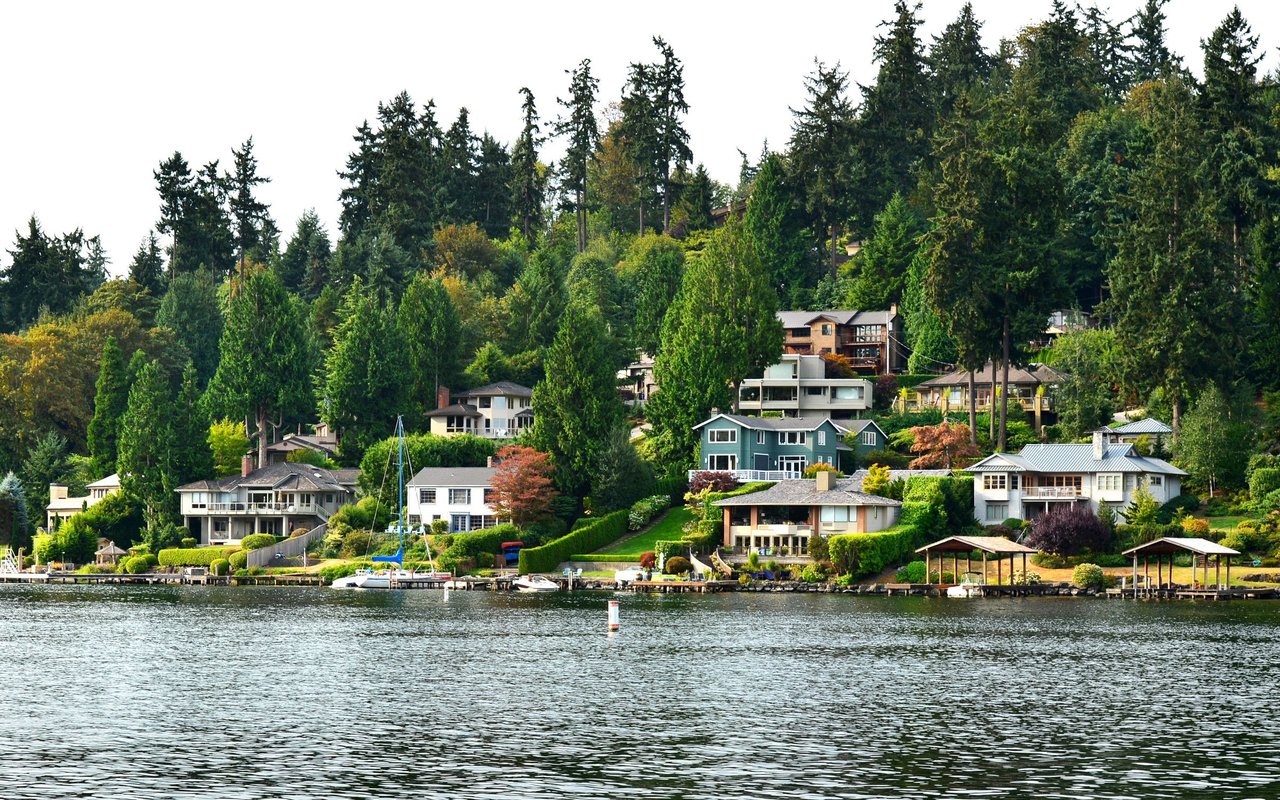
Kirkland feels more waterfront-oriented and neighborhood-scaled. Marina Park serves as a downtown waterfront landmark close to restaurants and shops, and the city’s parks and trail network supports a more outdoor-focused daily rhythm.
For buyers who want a smaller-scale environment with visible water access and a residential feel, Kirkland often stands apart. It can be a strong choice if your ideal day includes walkable pockets, shoreline views, and a less urban pace.
Which City Fits Your Priorities Best?
If you are trying to narrow the field, it helps to start with your top priority rather than searching all three cities the same way.
Redmond may be your best fit if you want:
- Proximity to Microsoft or nearby tech campuses
- Light rail access tied to future growth
- A market with strong multifamily and condo presence
- A balance of parks, trails, and evolving urban centers
Bellevue may be your best fit if you want:
- The most urban Eastside lifestyle
- Strong regional connectivity to Seattle and Redmond
- The widest range of multifamily and high-density housing options
- Access to a major employment and retail hub
Kirkland may be your best fit if you want:
- A more residential, ownership-oriented setting
- Waterfront amenities and neighborhood-scale living
- Slightly lower citywide pricing than Bellevue and Redmond
- Flexibility through road, bus, and trail access
A Smart Way to Narrow Your Search
For most tech buyers, the right city comes down to tradeoffs, not a universal winner. The best choice depends on whether you value employer proximity, transit, housing style, waterfront access, or a more urban daily experience.
That is why a city-to-city comparison should always lead into a neighborhood-level strategy. Within each of these markets, your experience can shift a lot based on the specific area, housing type, and commute pattern you are targeting.
If you want help comparing Redmond, Bellevue, and Kirkland through the lens of your budget, commute, and long-term goals, Latifa Sciore can help you build a focused Eastside home search with clarity and confidence.
FAQs
How do Redmond, Bellevue, and Kirkland compare for tech commuters?
- Average commute times are very similar, ranging from 23.2 to 23.9 minutes, so the bigger difference is whether you want rail access, bus connectivity, or proximity to a specific job center like Microsoft or downtown Bellevue.
Which city has the highest home prices among Redmond, Bellevue, and Kirkland?
- Bellevue has the highest reported average home value in this comparison at $1,527,243, followed by Redmond at $1,402,276 and Kirkland at $1,274,801.
Is Redmond, Bellevue, or Kirkland better for buyers who want condos or multifamily options?
- Bellevue offers the broadest urban multifamily mix, while Redmond also has a large apartment and condo presence tied to transit-oriented growth.
Is Kirkland more residential than Redmond or Bellevue?
- Kirkland is the most ownership-oriented of the three based on owner-occupancy rates, and its housing stock still leans more toward detached homes even as multi-unit housing grows.
Which Eastside city is best for Microsoft employees buying a home?
- Redmond is the clearest fit for Microsoft-adjacent buyers because of its direct proximity to campus and its light rail stations, including Redmond Technology Station near Microsoft.
What should tech buyers focus on when choosing between Redmond, Bellevue, and Kirkland?
- Start with your job location, preferred housing type, transit needs, lifestyle goals, and budget, since each city offers a different mix of commute convenience, housing inventory, and daily feel.